Representatives of public institutions, advisory services, municipalities and academia met in Berane, Montenegro to explore practical, locally adapted solutions for climate-resilient agriculture.
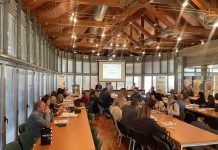
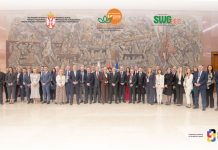
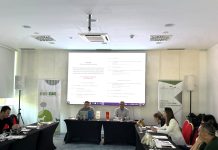
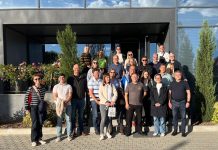
Organized by the Ministry of Agriculture, Forestry and Water Management of Montenegro, the National Training Workshop on “Strengthening Capacities for Climate Change Adaptation in Agriculture” took place on 3 September 2026 at Hotel Berane in Berane, Montenegro.
Eighteen participants attended, representing the Ministry of Agriculture, Forestry and Water Management, agricultural extension and advisory services, municipal agriculture departments, and academic institutions. The Training Manual for Agricultural Extension and Advisory Services on Climate Change Adaptation in the Western Balkans (2026) served as the main resource used during the training.
Sessions on soil and water management covered measures such as reduced tillage, composting, mulching, cover crops, efficient irrigation, soil-moisture monitoring and rainwater storage. Participants emphasized that recommendations must reflect each farm’s terrain, soil, equipment, water availability and production system. A participant questionnaire identified manure application and drip irrigation as the most readily applicable measures. The main barriers were limited funding, equipment, labor, water access and technical knowledge, as well as fragmented and difficult terrain.
Participants called for greater investment in irrigation and water-storage infrastructure, machinery, support for young farmers, processing facilities and secure market access. They also recommended study visits that would allow advisers to observe successful practices and adapt them to local conditions.
The crop-production sessions examined increasing temperatures, drought, heat waves, irregular rainfall, floods, frost and growing pest and disease pressure across Montenegro’s agricultural regions. The discussion stressed the need for region-specific advice based on local climate, terrain, production type and farm vulnerability. Recommended measures included adjusting sowing dates, choosing drought- and heat-tolerant varieties, diversifying crops, improving irrigation and fertigation, using shading and anti-hail systems, and applying digital decision-support tools.
Livestock sessions focused on heat stress, particularly in dairy cattle, and its effects on productivity, animal health and welfare. Suggested responses included better barn ventilation and cooling, continuous access to clean water, shade, adapted feeding schedules and regular monitoring of temperature and humidity. The sessions encouraged a shift from reacting to climate-related damage toward prevention, monitoring and planned investment in resilient production systems. Farm-level recommendations should remain practical, affordable and suited to local conditions.
The economic module introduced production budgeting, partial budgeting and cost-benefit analysis as practical tools for assessing adaptation investments. Participants discussed how advisers can explain costs, benefits, payback periods and risks in clear terms that support farm-level decisions. Sensitivity analysis was highlighted as essential under climate and market uncertainty. Advice and support measures should also be accessible to women, young farmers and smallholders.
The workshop concluded with a shared commitment to practical, locally adapted and economically justified recommendations. Participants recognized the Training Manual as a valuable foundation for future capacity-building and advisory work, and highlighted follow-up training, demonstration farms, study visits and continued knowledge exchange through the Agricultural Knowledge and Innovation System (AKIS).
The activity is implemented within the framework of the regional project “Green Agenda for the Western Balkans – Support to the Western Balkan Countries in Climate Change Adaptation”, founded by the German Government through the German Federal Ministry for Economic Cooperation and Development BMZ and implemented by GIZ in partnership with Standing Working Group for Rural Regional Development (SWG RRD).