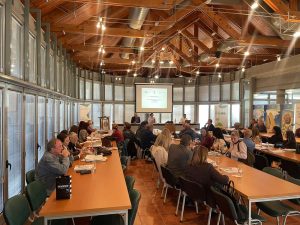
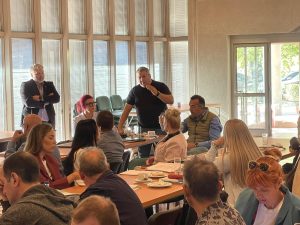
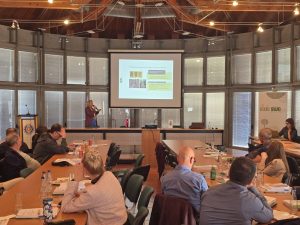
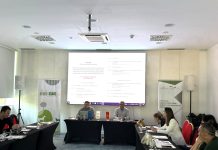
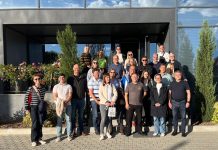
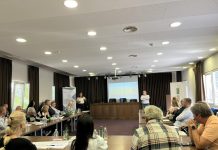
On 7 October 2026, thirty eight (38) representatives of agricultural advisory services, research institutions and the Ministry of Agriculture, Forestry and Water Management gathered at the Maize Department of the Institute NS Seme in Čenej, near Novi Sad, for the third National Training Workshop for Extension and Advisory Services. Entitled “Strengthening Capacities for Climate Change Adaptation in Agriculture,” the event focused on practical ways to help farmers respond to increasingly variable climatic conditions.
The workshop combined expert presentations, practical examples and professional discussion to strengthen the ability of advisers to identify climate risks, assess farm vulnerabilities and recommend appropriate adaptation measures. Opening remarks by Dragana Latković, Director of the Institute NS Seme, and Deputy Minister Aleksandar Bogićević, Ministry of Agriculture, Forestry and Water Management of Serbia highlighted the importance of cooperation among advisory services, research institutions and public authorities. Participants were also introduced to a methodology for comparing adaptation options and preparing locally relevant farm-level plans.
The workshop confirmed that effective climate adaptation requires an integrated approach that links soil, water, crops, livestock and farm economics. Agricultural advisers play a central role in translating scientific evidence and policy recommendations into practical, timely and locally appropriate guidance for farmers.
By improving technical knowledge, encouraging professional exchange and strengthening cooperation among institutions, the training contributed to a more coordinated system of support for Serbian farmers. Continued professional development, field demonstrations and closer collaboration will be vital as the agricultural sector prepares for more frequent and severe climate challenges.
The activity was organized with the support of GIZ and the Regional Rural Development Standing Working Group (SWG), on behalf of the German Government, within the Regional Climate Partnership between Germany and the Western Balkans.